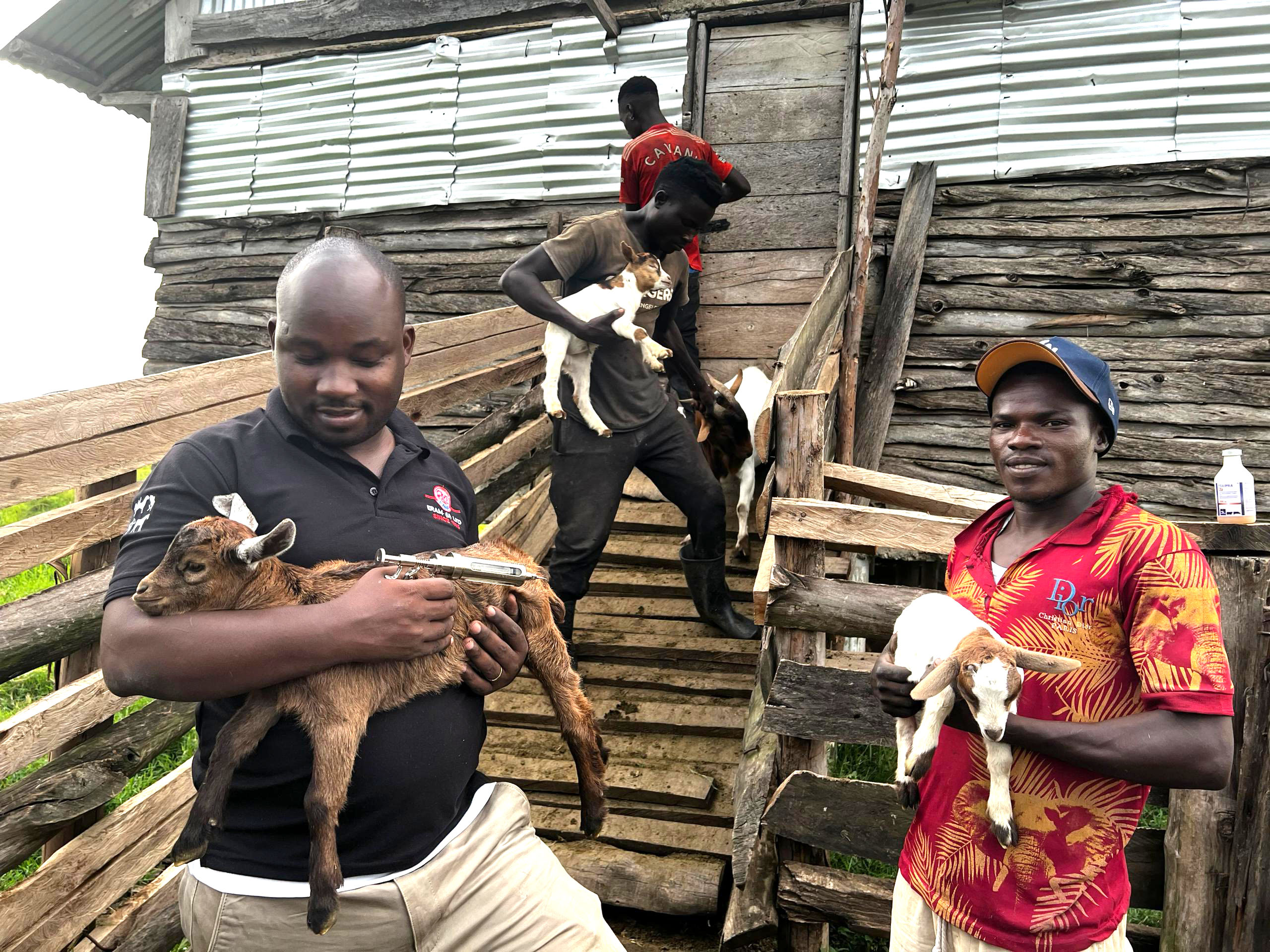

When you meet Edward Muhigirwa, Managing Director of ERAM (U) Ltd, you are immediately struck by his calm demeanour. The kind that only comes from years of perseverance, resilience, and a story that winds through Uganda’s most challenging decades.
“I am a chemist,” he begins, a modest smile lighting up his face. “ A humble person from a humble background.”
Muhigirwa grew up in what was then Kigezi, later Kabale, and now Rubanda District, in a small subcounty called Muko. His journey, like many of his generation, began in the hills of southwestern Uganda. This was during an era when education was faltering and survival meant more than just schooling.
Surviving Amin’s Uganda
During Idi Amin’s regime, Fridays were declared holidays because Amin was Muslim. “ That was when education lost its value,” Muhigirwa recalls. “ Those who were engaged in magendo the smuggling trade were seen as more successful than teachers. People lost interest in schooling. Many of my peers dropped out. I almost did too.”
To survive, villagers traded beans, peas, coffee, and tobacco across the border to Rwanda. “ We walked all night through Bufumbira to reach no man’s land by morning,” he says. “ In Rwanda, you were welcomed; in Uganda, you were arrested. We sold our goods there, bought soap, salt, and matchboxes, and came back to sell them. But even then, we had to travel at night to avoid arrest.”
That smuggling life continued until 1979, the year Amin was over- thrown and Muhigirwa completed Primary Seven.
A dream beyond the hills
Secondary school brought a turning point. While many of his peers dropped out, Muhigirwa found inspiration in a local student, Innocent Basingwa, who was always smartly dressed and performed well in school.“He became my role model. I wanted to be like him,” he says.
At Ibanda Secondary School, Muhigirwa’s entrepreneurial streak emerged. He began cultivating irish potatoes on a small scale, and by Senior Four, he was filling Tata trucks with produce. “ I built first house from potato money. It had seventy iron sheets,” he says proudly.
His dream was to become a doctor, inspired by the crisp uniforms of nurses and doctors he admired in hospitals. But fate had other plans.
Becoming a chemist
In 1986, Muhigirwa joined Makerere University for a Bachelor of Science degree, majoring in Chemistry with Zoology & Botany as beginners subject. “ Everyone discouraged me. They said Chemistry was too difficult. But I took it on anyway, and it turned out to be my strongest subject,” he recalls.
After graduation, he stayed on at Makerere, living in University Hall. “ I was part of MUFA, the Makerere University Fluking Association,” he laughs.
While there, he was hired by an Indian family in Kansanga to coach their son.“The boy hated studying. At one point, he threatened to commit suicide if forced to continue. His parents stopped the lessons but paid me well,” he recalls with a chuckle.
Soon after, he joined INLEX Pharmaceuticals now Kampala Pharmaceuticals around 1990 but struggled to make ends meet. Then, he stayed at Rubaga Hospital with his uncle, Dr Charles Byabamazima, who had just qualified as a doctor. Transport from Rubaga to Ntinda was Shs400, but was given only Shs200. “ When I asked the Indian employer to top up, he fired me.”
As he trudged back, fate intervened again. A friend told him that the Public Service Commission at Crested Towers was recruiting. He crossed over immediately, applied, and passed interviews for a position as Scientific Officer in the Ministry of Animal Industry & Fisheries.
“ It wasn’t glamorous as the salary was small. But it was a start,” he says.
The birth of a businessman
While working with the Ministry, Muhigirwa noticed veterinary drugs coming into the country, a side stream that would later define his career. “ I started dealing in those medicines informally. I’d buy small quantities from local suppliers and sell them. At first, people didn’t trust me, but eventually, they did,” he says.
Later, he met Silver Tuhiirwe, a fellow chemist, and Dr Joseph Byamugisha, and together they ormed STAR Enterprises in Container Village. “We worked hand in hand. But space was limited, and we needed better facilities,” he says.
Muhigirwa later joined Muhika Enterprises, while Dr Alice Banga operated Twesige Mukama Company. When the National Drug Authority (NDA) began operations in 1994, it required businesses handling drugs
to meet strict standards.
“Our shops were too small,” he recalls. “ We pooled resources — Alice Banga, Richard Mucunguzi, and I to meet the requirements.”
They moved to Nakawa, opposite the bridge, and in 1995, the first ERAM Pharmacy was born.
“The name ERAM came from our initials,” he explains. “ E for Edward, R for Richard, A for Alice, and M for Money — because we had come to make money.”
Finding a niche in veterinary medicine
Initially, the government was the main supplier of veterinary drugs. When privatisation took over, a huge gap was created. “ The sup- ply of vet drugs was limping. We started sourcing medicines from local suppliers. That’s how we filled the gap,” says Muhigirwa.
At the time, Cooper Uganda (later MTK) was the dominant player, alongside a few foreign firms like Fort Dodge and Rhone-Poulenc. But when some of their country operations ended, they appointed ERAM to take over distribution.
In 2000, Fort Dodge awarded ERAM a franchise and handed them their former Shell office space. That was a turning point. “ They trained us in corporate governance and capacity building. That’s when we began to see ourselves as a real company,” Muhigirwa says.
Even when big pharmacies came up, we had five strong suppliers Fort Dodge, Merial, Hipra, Lohmann, and Rhone-Poulenc — all European,” he says. “ That kept us strong.”
ERAM opened accounts with UCB, now Stanbic Bank, a partner- ship that remains to this day.
Growing through challenges
Competition and credit risks have been the company’s biggest hurdles. “ We sell mainly on credit, and not all partners are honest,” he admits.“We’ve lost a lot of money.”
Still, ERAM has continued to innovate partnering with Makerere University, NARO, and the Ministry of Agriculture to train interns and researchers.
In 2005, ERAM shifted its head offices from Shell to its own building, the former residence of an Indian family, which they had purchased strategically. “When Shell wanted their premises back, we had already completed the ground floor here,” says Muhigirwa.
As the business stabilised, the team looked to expansion. They acquired land in Lugazi, near Tembo Steels, to set up a demonstration farm and hatchery. “ We wanted to show what our products could do. It cost us 400,000 Euros to establish the hatchery in 2011,” he explains.
Their long relationship with Stanbic Bank helped them secure an Agricultural Development Loan from the Bank of Uganda, enabling them to build a factory and farm.
Then Covid-19 struck.
“The hatchery was running, the birds were feeding, but we couldn’t sell chicks or eggs,” he says. “ The feed was on credit, and the birds just kept eating. We lost a lot of money and eventually had to close the farm.”
Pioneers in poultry vaccines
Around 1997, when ERAM was taking over from Fort Dodge, the team wanted to handle vaccines but were discouraged. “ They said vaccines were risky, requiring a cold chain of 2–8°C,” says Muhigirwa.
But a Spanish company, Hipra, believed in them, encouraging them to take on the challenge. “ Back then, everyone focused on ruminants and poultry was neglected. We took it up and today, poultry is thriving because it’s easier to manage and doesn’t need large tracts of land.”
Through endurance and adapt- ability, ERAM became a pioneer in poultry vaccines in Uganda.
A legacy built on persistence
Three decades on, ERAM stands tall. It is a symbol of grit, vision, and faith in the power of small beginnings.
“From magendo to managing a company, it has been a long journey,” says he, his eyes soft with nostalgia. “ We have faced hardship, but have also witnessed growth. Endurance is what sustains you.”
ERAM will continue the promise of building strong trusted partner- ships and collaborations with all our partners to build a strong foundation that gives clear solutions to the end users.